You spend the day searching the winding streets of Hong Kong, looking for the Jane Street office. After a long day of walking, you eventually make your way back to where you started, creating one long loop. You never find the Jane Street office, but you still discover something impressive. What do you find in Hong Kong along your walk?
In the grid, make a single closed loop. Your line will pass through the centers of some of the square cells, moving horizontally or vertically between them. Your line will never cross itself.
The symbols in the grid each correspond to one of the following rules, but you will need to determine which symbol belongs to which rule. One of the symbols’ rules is given to you — the Bauhinia blakeana flower, the official symbol of Hong Kong. The loop must pass through some symbols, and must not pass through others. The rules are:
Click a symbol under a rule to cross it off (✕). Click again to mark it as a match (✓).
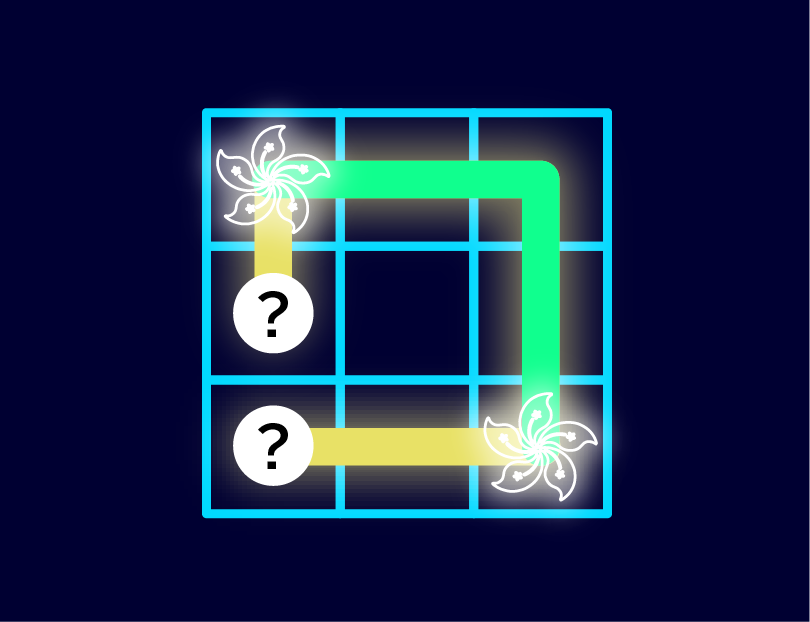
A pair of these symbols are always passed through one after the other, with no other symbols being passed through in between. The loop never passes through more than 2 of this symbol in a row.
 Bauhinia blakeana (given)
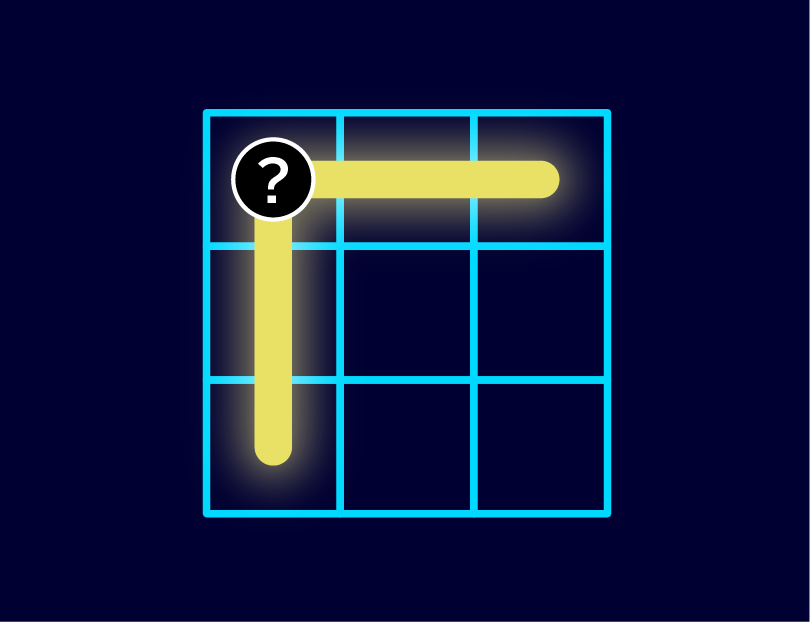
The loop must turn in this symbol’s cell, and then must pass straight through the next cells on either side.

The loop must travel the same distance on both sides of this symbol before passing through another symbol.
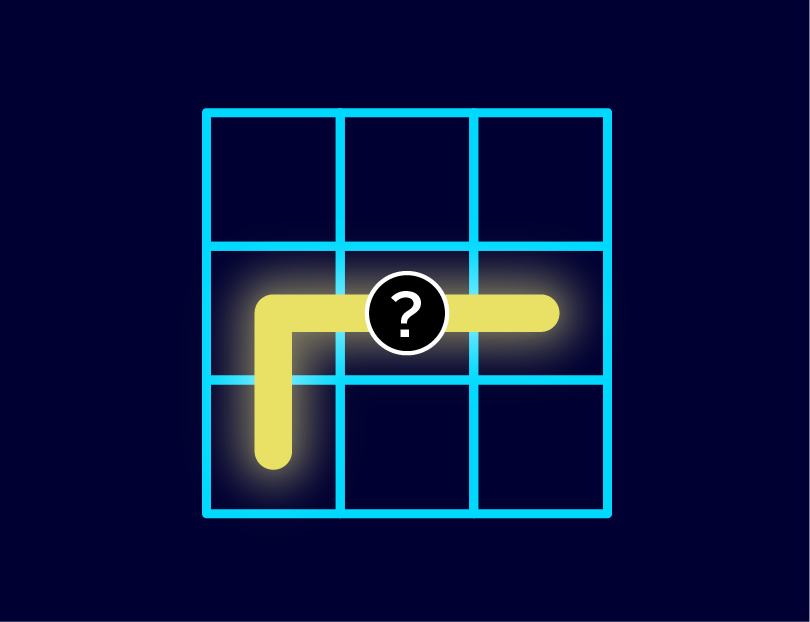
The loop must pass straight through this symbol’s cell, and then must turn in at least one of the cells next to this symbol.
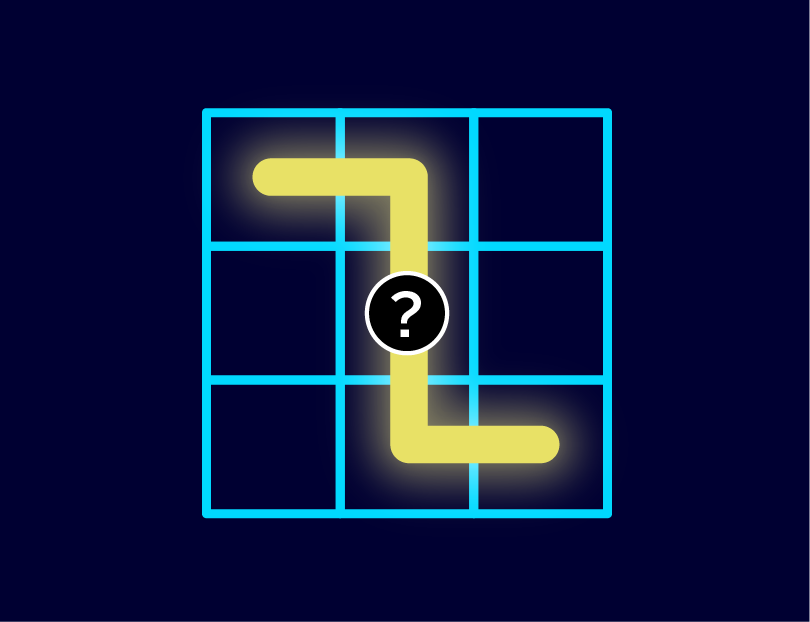
The loop must pass straight through this symbol’s cell, and the loop must travel the same distance on both sides of this symbol before turning.
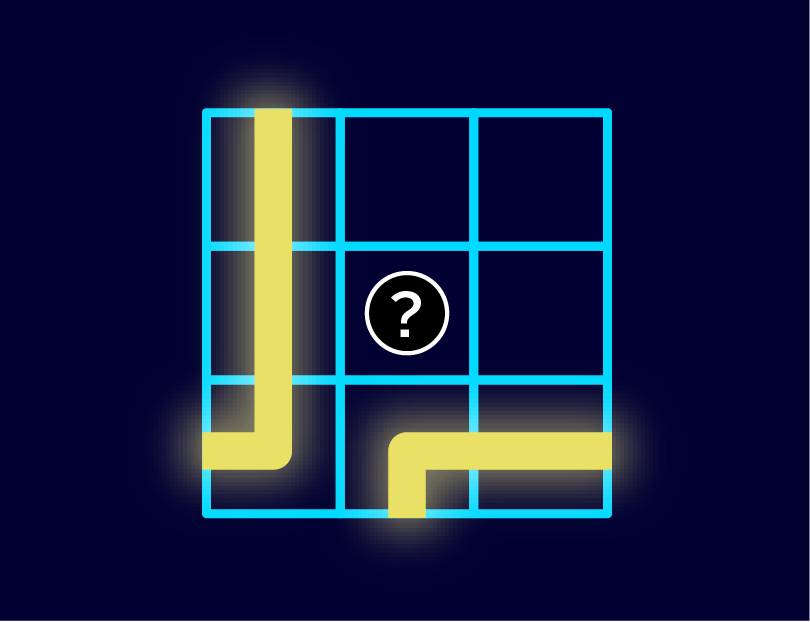
The loop must pass through exactly 2 (no more or less) of this symbol’s orthogonal neighbors.
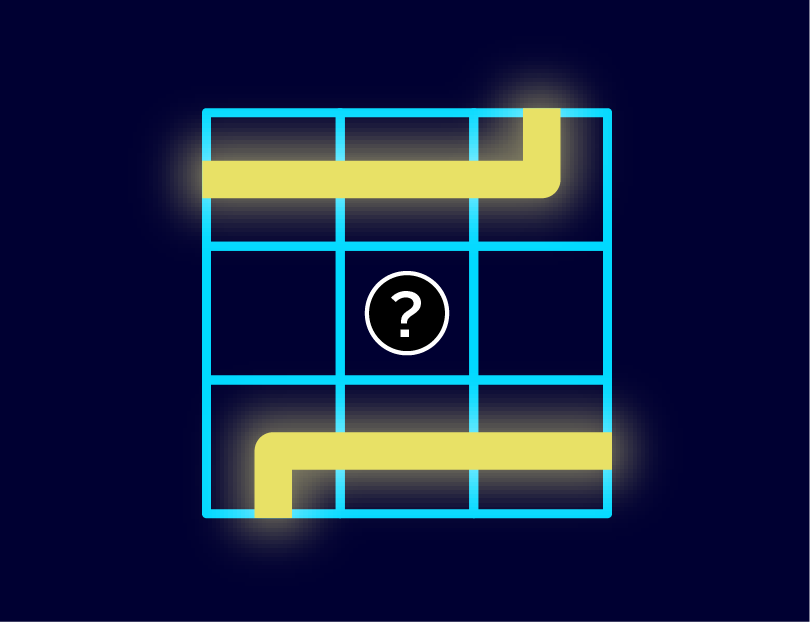
The loop must be 180° rotationally symmetric in the cells, both orthogonal and diagonal, that surround this symbol. This symbol is not found on the edge of the grid.
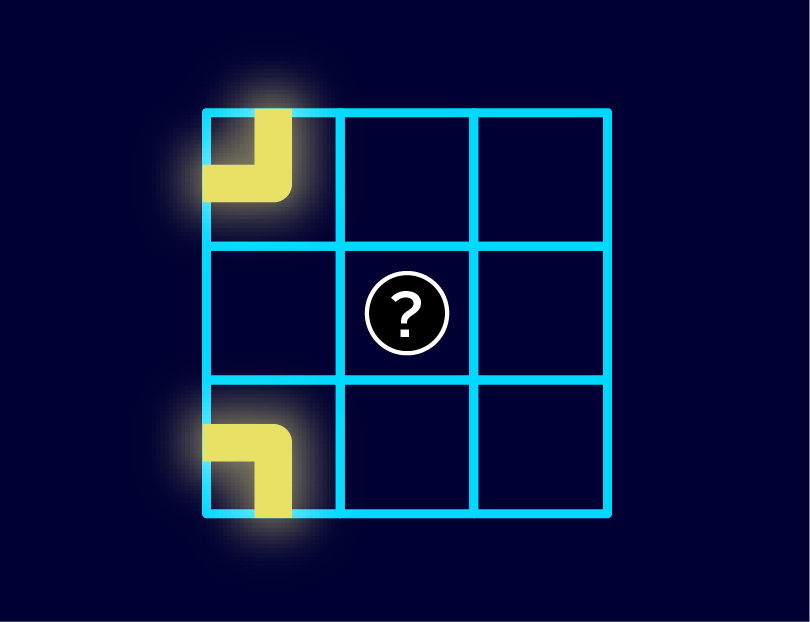
The loop must not pass through any of this symbol’s orthogonal neighbors.

This symbol must be contained inside the completed loop.
Drag between cells to draw your loop; drag back over a line to erase it. Double-tap the border between two cells to mark it with an ✕. Toggle on hint lines if you get stuck.
Pinch the grid to zoom in/out. Use two fingers to drag and move the grid around.
Loop complete!
Tap a Bauhinia flower to bold the path between it and its partner.
Once you have mapped out your route, you reflect on your path, taking note of all the beautiful Bauhinia flowers along the way. What did you find along your walk?
That's right!
You solved The Hong Kong Loop and found
‹ back to puzzle